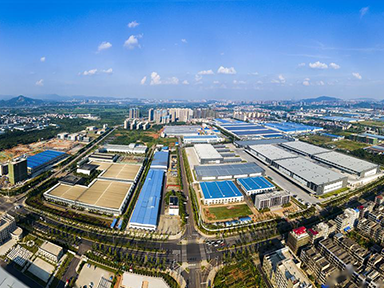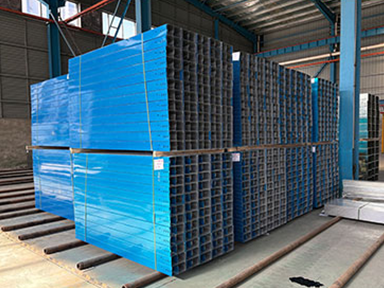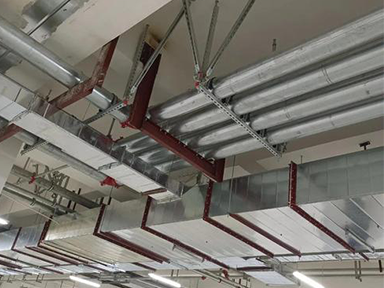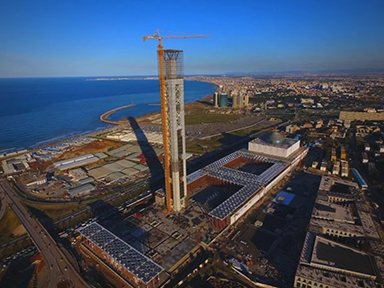
The African continent is experiencing an unprecedented infrastructure boom. The Belt and Road Initiative (BRI) is deeply aligning with the African Union's Agenda 2063 , accelerating project implementation across transportation, power, telecommunications, and digital infrastructure sectors.
Demand for cable trays is growing rapidly in data center, port, and light rail projects in countries such as Ethiopia, Tanzania, Mozambique, Kenya, Nigeria, and Ghana. Industry forecasts suggest that the African cable tray market will achieve a compound annual growth rate (CAGR) of over 10% over the next five years (2025-2030) – one of the fastest-growing regional markets globally.
The alignment of China's Belt and Road Initiative with the African Union's Agenda 2063 has created a powerful framework for infrastructure development across the continent.
| Priority | Related Infrastructure | Cable Tray Applications |
|---|---|---|
| Integrated high-speed rail network | Rail transportation | Signaling, power distribution, communications |
| Continental free trade area (AfCFTA) | Ports, logistics hubs | Container terminal electrical systems |
| Universal access to electricity | Power generation & distribution | Substations, grid connections |
| Digital single market | Data centers, telecom towers | Cable management for IT infrastructure |
| Sustainable development | Renewable energy projects | Solar farms, wind power |
| World-class infrastructure | Airports, industrial parks | Building electrical systems |
Chinese companies are among the largest contractors and investors in African infrastructure:
China Railway Engineering Corporation (CREC) : Rail and transit projects
China Harbour Engineering Company (CHEC) : Port and marine infrastructure
China State Construction Engineering Corporation (CSCEC) : Buildings and industrial parks
Huawei Technologies : Data centers and telecommunications
Numerous provincial and regional contractors on smaller projects
For cable tray suppliers like Burkaf, partnering with Chinese EPC contractors on African projects has become a significant business channel – as demonstrated by Burkaf's project track record across Ethiopia, Tanzania, and Mozambique.
Ethiopia has been one of the continent's fastest-growing economies, with corresponding infrastructure investment:
Key projects:
Addis Ababa Light Rail (East Africa's first LRT) – depot electrical systems (Burkaf project)
Addis Ababa – Djibouti Railway (756 km electrified rail)
Industrial parks (Bole Lemi, Hawassa, Kombolcha, Kilinto)
Data center development (government and telecom facilities)
Cable tray demand drivers:
Rail electrification and signaling systems
Factory and industrial park electrical infrastructure
Data center and telecom facility expansion
Tanzania is investing heavily in port modernization and rail connections to landlocked neighbors:
Key projects:
Dar es Salaam Port – container terminal electrical systems (Burkaf project)
Bagamoyo Port (planned mega-port)
Standard Gauge Railway (Dar es Salaam – Mwanza)
Digital infrastructure expansion
Cable tray demand drivers:
Port terminal electrical upgrades
Railway signaling and communications
Telecom tower and data center build-out
Mozambique is leveraging its natural gas resources to drive infrastructure investment:
Key projects:
Maputo Data Center – Tier III facility (Burkaf project)
Coral South FLNG (offshore gas project)
Mozambique LNG (onshore facilities)
Nacala Port and Rail Corridor
Cable tray demand drivers:
Data center cable management
Industrial and energy facility electrical systems
Port and rail infrastructure
| Country | Key Sectors | Cable Tray Growth Outlook |
|---|---|---|
| Kenya | Data centers (Nairobi), Mombasa Port, railway, renewable energy | Very high (12%+ CAGR) |
| Nigeria | Data centers (Lagos, Abuja), port modernization, industrial zones | High (10-12% CAGR) |
| Ghana | Tema Port expansion, oil & gas, data centers | Moderate-high (8-10% CAGR) |
| Angola | Post-war reconstruction, port development, telecom | Moderate (6-8% CAGR) |
| Côte d'Ivoire | Abidjan port, rail, data centers | Moderate (6-8% CAGR) |
| Senegal | Diamniadio industrial park, Dakar port, rail | Emerging (8-10% CAGR) |
| Rwanda | Data centers (Kigali), tech hubs, industrial parks | High (10-12% CAGR) |
Africa's digital transformation is driving data center construction across the continent:
Growth drivers:
Increasing internet penetration (mobile and fixed broadband)
Cloud service provider expansion (AWS, Azure, Google, Alibaba Cloud have or are planning African presence)
Financial services digitization
Government digital services
Content delivery network (CDN) deployment
Key data center markets:
South Africa (Johannesburg, Cape Town, Durban) – most mature
Kenya (Nairobi) – East Africa hub
Nigeria (Lagos, Abuja) – West Africa hub
Ethiopia (Addis Ababa) – government and telecom
Ghana (Accra) – emerging hub
Mozambique (Maputo) – Southern African growth
Cable tray requirements: Perforated trays for heat dissipation, C-channels for support, grounding systems for electrical safety.
Africa's ports are being modernized to handle increased trade under the African Continental Free Trade Area (AfCFTA):
Major port projects:
Dar es Salaam (Tanzania) – modernization
Mombasa (Kenya) – expansion
Tema (Ghana) – new terminal
Lekki (Nigeria) – deep sea port
Nacala (Mozambique) – coal and general cargo
Abidjan (Côte d'Ivoire) – modernization
Dakar (Senegal) – new terminal
Cable tray requirements: Hot-dip galvanized trays for corrosion resistance in marine environments, conduits for cable protection, grounding for electrical safety.
Several African countries are building or expanding rail networks:
Key rail projects:
Addis Ababa Light Rail (Ethiopia) – operational (Burkaf project)
Standard Gauge Railway (Tanzania, Kenya, Rwanda, Uganda)
Lagos Rail Mass Transit (Nigeria)
Various mining railway lines (across the continent)
Cable tray requirements: Tray systems for depots, stations, signaling houses, and wayside equipment.
Africa's electricity access deficit creates ongoing demand for power infrastructure:
Key sectors:
Hydropower (Grand Ethiopian Renaissance Dam, Inga Dam – DRC)
Solar PV (multiple countries, particularly South Africa, Egypt, Morocco)
Wind power (Kenya, Ethiopia, Morocco)
Grid expansion and substation upgrades
Cable tray requirements: Heavy-duty trays for power cables, corrosion-resistant finishes for outdoor installations.
Many African countries are developing industrial parks to attract manufacturing investment:
Key zones:
Ethiopia: Multiple industrial parks (Bole Lemi, Hawassa, etc.)
Kenya: Tatu City, Konza Technopolis
Nigeria: Lekki Free Zone, Ogun-Guangdong Zone
Senegal: Diamniadio Industrial Park
Rwanda: Kigali Special Economic Zone
Cable tray requirements: Comprehensive solutions including power and low-voltage segregation, flexible conduits for equipment connections, seismic supports where required.
The African cable tray market presents unique challenges that suppliers must address:
Long supply chains from manufacturing centers (typically China, India, Turkey, or Europe)
Port congestion at some African ports
Inland transportation infrastructure limitations
Need for reliable delivery commitments to EPC contractors
Successful suppliers maintain regional stock, work with experienced logistics partners, and build buffer into delivery schedules.
Tropical humidity and rainfall (West and Central Africa)
High-altitude temperature variations (East Africa)
Marine corrosion (coastal port cities)
Dust and arid conditions (Sahel region)
Successful suppliers offer products with appropriate finishes (hot-dip galvanized for coastal, standard finishes for inland dry areas).
Most major African infrastructure projects are financed by international development banks (World Bank, AfDB, European development finance institutions) or implemented by international contractors. Products must meet:
IEC or BS EN standards for cable trays
CE certification for safety
RoHS compliance where specified
Working with Chinese, European, Turkish, or local contractors
Providing technical submittals and sample approvals
Coordinating batch deliveries with construction schedules
Offering on-site technical support where needed
The African cable tray market features several supplier categories:
| Supplier Type | Advantages | Challenges |
|---|---|---|
| Chinese manufacturers (export-oriented) | Cost-competitive, experienced with BRI projects, large production capacity | Shipping lead times, after-sales support distance |
| Indian manufacturers | Proximity to East Africa, cost-competitive, English-speaking | Less established in West/Southern Africa |
| Turkish manufacturers | Proximity to North Africa, good quality, shipping advantages | Limited presence in Sub-Saharan Africa |
| European manufacturers | Premium quality, recognized brands, technical support | Higher cost, less competitive on price-sensitive projects |
| Local African fabricators | Short lead times, no import duties, on-site support | Limited capacity for large projects, quality consistency |
Burkaf's approach – manufacturing in optimized locations while working closely with international EPC contractors – has proven successful for African projects.
Several factors will sustain Africa's cable tray market growth over the next five years:
Continued BRI investment – China remains committed to African infrastructure
AfCFTA implementation – Increased trade drives port and logistics investment
Digital transformation – Data center and telecom infrastructure expansion
Renewable energy targets – Solar and wind projects across the continent
Demographic trends – Growing, young, urbanizing population requiring infrastructure
Currency volatility – Many African currencies fluctuate against USD and EUR
Political stability – Varies significantly by country
Debt sustainability – Some countries face debt service challenges
Project financing delays – Development bank approval processes can be lengthy
| Year | Estimated Market Size (USD) | Annual Growth Rate |
|---|---|---|
| 2024 (baseline) | $250-300 million | – |
| 2025 | $275-335 million | ~10% |
| 2026 | $305-375 million | ~11% |
| 2027 | $340-420 million | ~12% |
| 2028 | $380-470 million | ~12% |
| 2029 | $425-530 million | ~12% |
| 2030 | $475-600 million | ~12% |
Note: Estimates vary based on project pipeline realization.
Africa's infrastructure construction boom – driven by alignment of China's Belt and Road Initiative with the African Union's Agenda 2063 – is creating one of the world's fastest-growing regional markets for cable tray products.
Demand is particularly strong in East Africa (Ethiopia, Tanzania, Kenya, Mozambique, Rwanda), with data centers, ports, light rail, and industrial parks leading the way. Industry forecasts project a compound annual growth rate of over 10% through 2030 , making Africa a strategic growth market for cable tray manufacturers and suppliers.
For suppliers like Burkaf – with demonstrated project experience across Ethiopia, Tanzania, and Mozambique – the continent represents both a significant opportunity and a complex market requiring logistical capability, climate-appropriate products, and strong partnerships with international EPC contractors.
Source: Industry market analysis, African infrastructure project tracking, BRI and Agenda 2063 documentation, 2024.
Burkaf – Cable Tray System Expert. Supporting Africa's Infrastructure Growth with Reliable Cable Management Solutions.