The global data center construction boom is creating unprecedented demand for specialized cable management solutions. As organizations across every industry accelerate their digital transformation initiatives, the need for reliable, efficient, and scalable data center infrastructure has never been greater. At the heart of this infrastructure lies a critical but often overlooked component: the perforated cable tray.
According to industry data, the global market for cable trays used in data centers grew by 15% year-on-year in 2023, significantly outpacing the broader cable tray market. With data center construction showing no signs of slowing, industry analysts project that double-digit growth will continue over the next five years (2024-2028).
Data centers present unique challenges for cable management that differ substantially from commercial or industrial buildings:
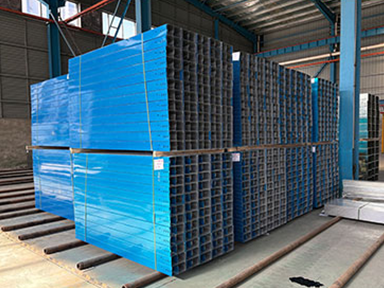
Server racks generate enormous amounts of heat. Dense cable bundles can trap heat, raising local temperatures and reducing cooling system efficiency. Perforated (ventilated) cable trays allow hot air to rise and circulate freely, preventing heat buildup around cables and contributing to overall data center cooling efficiency.
A single data center rack may contain dozens or hundreds of cables for power, networking, storage, and management. Perforated trays make it easy to secure cables with zip ties or lashing at any point along the tray, providing flexibility for dense installations.
Data centers are dynamic environments. Cables are added, removed, and rerouted regularly as servers are deployed, upgraded, or decommissioned. Perforated trays offer excellent accessibility, allowing technicians to make changes quickly without removing existing cables.
The open design of perforated trays allows visual inspection of cables, making it easier to identify damaged cables, trace individual runs, and verify proper separation between power and data cabling.
Perforated trays are typically lighter than solid-bottom trays while maintaining comparable strength, reducing structural loading on data center overhead supports.
Several factors are fueling the surge in perforated cable tray demand:
Cloud providers including AWS, Microsoft Azure, Google Cloud, and阿里巴巴 (Alibaba Cloud) are investing billions in new hyperscale data centers worldwide. These facilities require massive quantities of cable trays – often hundreds of kilometers per facility – with perforated designs being the standard specification.
The proliferation of 5G networks and IoT devices is driving construction of thousands of edge data centers. These smaller facilities still require proper cable management, with perforated trays being the preferred choice for consistency with central data centers.
The artificial intelligence boom is driving demand for high-density GPU clusters, which generate even more heat than traditional servers. Perforated cable trays are essential for maintaining airflow in these high-density environments.
Colocation providers are expanding existing facilities and building new ones to meet enterprise demand for outsourced IT infrastructure. Each expansion requires complete cable management systems.
| Region | Data Center Growth Drivers | Perforated Tray Demand Outlook |
|---|---|---|
| North America | Hyperscale expansion in Northern Virginia, Dallas, Silicon Valley, Atlanta | Strongest demand globally |
| Asia-Pacific | Rapid growth in Singapore, Tokyo, Seoul, Shanghai, Mumbai, Sydney | Fastest-growing market |
| Europe | Expansion in Frankfurt, London, Amsterdam, Paris, Dublin (FLAP-D markets) | Steady, mature growth |
| Latin America | Emerging hubs in São Paulo, Santiago, Mexico City | Accelerating demand |
| Middle East | New hubs in Dubai, Riyadh, Tel Aviv | Early stage, high potential |
Data center contractors are increasingly specifying pre-cut, pre-assembled tray sections to reduce on-site labor costs and accelerate deployment schedules.
With cable densities increasing, manufacturers are developing deeper and wider tray profiles to accommodate larger cable bundles while maintaining ventilation.
Factory-installed grounding jumpers and connection points are becoming standard to ensure reliable electrical continuity without field fabrication.
Some data center operators are adopting color-coded trays (e.g., blue for network, orange for power, yellow for security) to simplify system identification.
The demand for perforated cable trays will remain closely tied to global data center construction spending. Key trends to watch through 2028 include:
Continued hyperscale expansion as cloud adoption grows worldwide
Increased edge data center construction for 5G and IoT applications
AI infrastructure investment driving high-density GPU clusters
Sustainability requirements pushing demand for trays with recycled content
Modular data center designs requiring standardized, pre-fabricated cable management
Industry analysts project the data center cable tray market will exceed $1.5 billion annually by 2028, with perforated trays accounting for the majority of demand.
The data center construction boom shows no signs of slowing, and perforated cable trays have established themselves as the industry standard for cable management in these critical facilities. Their unique combination of heat dissipation, flexibility, accessibility, and light weight makes them indispensable for modern data center designs.
For manufacturers and suppliers like Burkaf, this sustained growth represents a significant market opportunity – provided they can meet the quality, delivery, and technical specification requirements of data center developers and contractors worldwide.
Source: Industry market analysis, 2024. Growth projections based on data center construction forecasts and cable tray consumption patterns.
Burkaf – Cable Tray System Expert. Your Partner for Data Center Cable Management Solutions.