The deepening advancement of Industry 4.0 and smart manufacturing is fundamentally changing the production models of the cable tray industry. What was once a largely manual, labor-intensive manufacturing process is rapidly evolving into an automated, data-driven, and highly efficient operation.
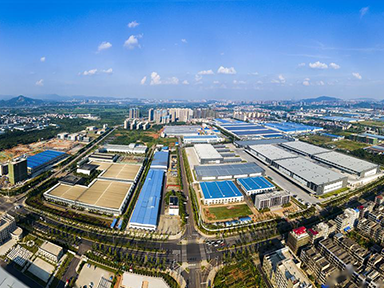
The application of technologies such as automatic welding robots, intelligent spraying lines, MES (Manufacturing Execution System) , and IoT (Internet of Things) connectivity has significantly improved production efficiency and product consistency. Leading companies in the industry are successively deploying digital factories, achieving visualization and traceability of production processes through IoT technology.
This transformation is not merely about adopting new machines – it represents a fundamental shift in how cable trays are designed, produced, quality-controlled, and delivered.
Traditional cable tray welding is labor-intensive, requiring skilled welders to produce consistent, high-quality joints. Automatic welding robots are changing this:
Benefits:
Consistent quality: Robots produce identical welds every time, eliminating human error and variation
Higher productivity: Robotic welding is significantly faster than manual welding
Reduced labor dependency: Less reliance on scarce skilled welding labor
Lower defect rates: Automated inspection can be integrated with robotic systems
24/7 operation capability: Robots can work multiple shifts without fatigue
Application in cable tray manufacturing:
Welding of tray side rails to rungs (ladder trays)
Corner and junction fabrication
Fitting and accessory welding
Tray section joining (flange and splice plate welding)
Surface finishing – particularly hot-dip galvanizing and powder coating – is critical for cable tray corrosion protection. Intelligent spraying lines bring precision and control to this process:
Benefits:
Uniform coating thickness: Automated controls ensure consistent application
Reduced material waste: Precise spraying minimizes overspray and waste
Environmental compliance: Better containment and filtration of coating materials
Energy efficiency: Optimized curing ovens with heat recovery
Quality documentation: Automated recording of coating parameters for traceability
Integration with MES:
Coating thickness data is automatically recorded and linked to production batches
Real-time monitoring of temperature, humidity, and application parameters
Automatic adjustment for different product types and specifications
MES serves as the digital backbone of the smart factory, connecting shop floor operations to business systems:
Key functions for cable tray manufacturing:
Production scheduling: Optimizing order sequencing to minimize changeover time
Work-in-progress tracking: Real-time visibility of order status
Quality management: In-process inspection data collection and analysis
Equipment monitoring: OEE (Overall Equipment Effectiveness) tracking
Labor tracking: Productivity measurement by operator and shift
Material traceability: Linking finished products to raw material batches
Benefits:
Reduced lead times
Lower work-in-progress inventory
Faster response to production issues
Data-driven continuous improvement
IoT sensors and connectivity bring real-time visibility to factory operations:
Applications:
Machine monitoring: Real-time status (running, idle, down) of each production asset
Predictive maintenance: Vibration, temperature, and current sensors predict equipment failures before they occur
Energy monitoring: Tracking energy consumption by machine and production run
Environmental monitoring: Temperature, humidity, and air quality in finishing areas
Asset tracking: RFID or BLE tags on raw materials and finished goods
Results:
Reduced unplanned downtime
Lower energy costs
Extended equipment life
Better production planning accuracy
Leading manufacturers are moving beyond individual technologies to fully integrated digital factories:
Components of a digital cable tray factory:
PLM (Product Lifecycle Management) for engineering and design
ERP (Enterprise Resource Planning) for order management and procurement
MES for production execution
WMS (Warehouse Management System) for inventory control
IoT platform for equipment and environmental monitoring
Data warehouse & analytics for continuous improvement
Integration benefits:
Seamless data flow from customer order to final delivery
Realistic production promises based on actual capacity
Automated quality documentation for each batch
Complete traceability for compliance requirements
Leading cable tray manufacturers are investing significantly in smart manufacturing capabilities:
Automated roll-forming lines: Continuous production with minimal manual intervention
Robotic welding cells: Automated fabrication of custom lengths and fittings
Integrated MES-IoT platforms: Real-time visibility across multiple facilities
Automated guided vehicles (AGVs) : Material movement between production steps
Automated packaging and labeling: Reduced handling and fewer shipping errors
Semi-automated production lines: Manual operations with digital work instructions
Basic MES implementation: Production tracking and basic quality data
Manual but digitally guided finishing: Spray parameters monitored and recorded
The gap between Tier 1 and Tier 2 manufacturers is widening as digital transformation accelerates.
Manufacturers who have implemented smart manufacturing technologies report significant improvements:
| Metric | Typical Improvement |
|---|---|
| Production efficiency (units/labor hour) | +15-25% |
| Product consistency (dimensional variation) | -40-60% |
| Defect rate (per thousand units) | -50-70% |
| Order lead time | -20-35% |
| On-time delivery performance | +10-15% |
| Energy consumption per unit | -10-20% |
| Material waste (coating, steel) | -15-25% |
| Customer returns (quality issues) | -60-80% |
Despite the benefits, smart manufacturing adoption faces several challenges:
Automated equipment and digital systems require significant capital investment. Small and medium manufacturers may struggle to justify ROI, particularly in price-sensitive markets.
Operating and maintaining robotic welding cells, intelligent spraying lines, and MES systems requires new skills – automation engineers, data analysts, and system integrators – that may be scarce in some manufacturing regions.
Connecting new automated equipment to existing ERP systems and legacy machinery requires careful planning. Incompatibility between systems from different vendors is a common challenge.
Shop floor workers may resist automation that changes their roles. Successful implementation requires training, communication, and often workforce reskilling.
Several trends will shape the next phase of smart manufacturing in the cable tray industry:
Machine vision systems will automatically inspect trays for dimensional accuracy, coating defects, and surface finish – identifying issues in real-time during production.
Virtual replicas of production lines will enable offline simulation of schedule changes, new product introductions, and bottleneck analysis.
Machine learning will analyze production data to predict quality issues before they occur, automatically adjusting parameters to prevent defects.
Automated reordering of raw materials based on real-time consumption and production schedules will reduce inventory while preventing shortages.
Smart systems will optimize energy use, reduce scrap, and minimize coating waste – supporting environmental compliance and cost reduction.
Smart manufacturing – driven by automatic welding robots, intelligent spraying lines, MES, and IoT connectivity – is fundamentally transforming the cable tray industry. Leading manufacturers are achieving significant improvements in efficiency, consistency, and traceability through digital factory deployment.
While challenges including high upfront investment and skills gaps remain, the competitive advantages of smart manufacturing are becoming impossible to ignore. Manufacturers who delay digital transformation risk falling behind as customers increasingly expect consistent quality, fast delivery, and full traceability.
For the cable tray industry, the question is no longer whether to adopt smart manufacturing, but how quickly – and how completely – to implement these transformative technologies.
Source: Industry manufacturing trends analysis, factory automation data, and cable tray industry surveys, 2024.
Burkaf – Cable Tray System Expert. Smart Manufacturing for Consistent Quality and Reliable Delivery.